The Captain Is Not a Second Coach
Understand a sports captain’s role beside the coach: follow who sets tactics, who communicates on the field and how leadership shapes a team’s response.
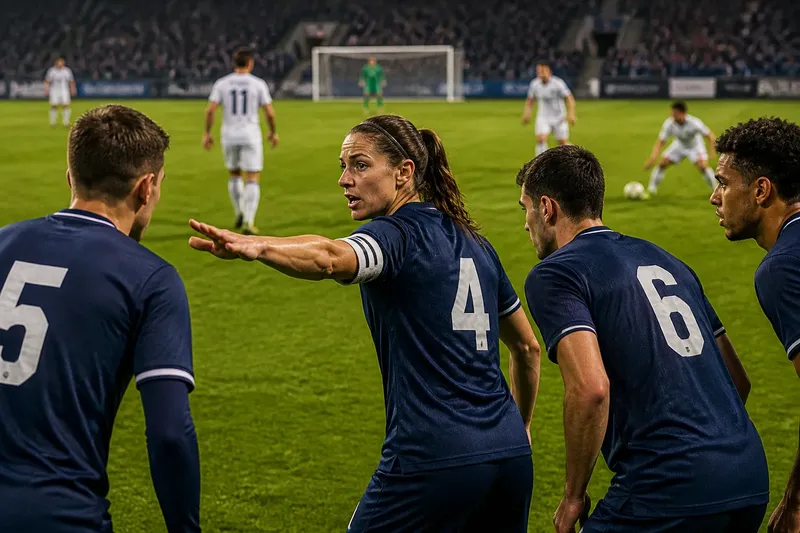
During a close football match, the right-back spots an opposing winger moving inside while a midfielder is tiring. The captain calls for the midfielder to hold position and asks the right-back to stay narrow. A few minutes later, the coach signals a substitution and changes the team’s pressing approach. Both actions affect the game, but they do not come from the same job. Understanding the captain’s role in sport means separating leadership on the field from formal coaching authority.
The match gives the captain a problem to solve
Say you are watching an invented, hypothetical match between Northbridge and Vale, with the score level late in the game. Northbridge’s coach has asked the team to press high when Vale’s goalkeeper has the ball, then recover into a compact shape if that press is bypassed. The plan has been explained before play, and the players know their assigned positions.
As the second half wears on, Northbridge’s left midfielder begins arriving late to the press. Vale’s right-back has more time to pass, and Northbridge’s defence is starting to retreat. The captain, playing as a centre-back, can see the growing gap between midfield and defence. She cannot make a distant view of the whole match from the touchline, but she can read the space immediately around her and speak to nearby teammates.
She calls the left midfielder back into line and tells the other centre-back to step up with her. The instruction is local and brief: restore the spacing the team already practised. The players respond by closing the gap, and Vale finds it harder to pass through the middle. The captain has helped the team carry out its plan; she has not replaced the person who set it.
The coach owns the plan and its formal changes
A coach’s work usually reaches beyond the next few seconds of play. It can include selecting a formation, choosing starters and substitutes, preparing training, analysing opponents and deciding how the team should approach different phases of a match. The precise authority varies by sport, competition and team structure, but the coach or coaching staff generally hold responsibility for the tactical plan and formal changes.
A captain may influence those decisions. Coaches can ask captains what players are noticing, and a captain may raise a concern about fatigue, confusion or an opponent’s pattern. Giving useful information is not the same as having final authority. The coach considers that information alongside the team’s wider plan and decides whether to alter instructions or personnel.
In the imagined match, the coach sees that Vale has begun bypassing the first press with long passes. At a stoppage, the coach signals for Northbridge’s forwards to press less aggressively and protect the central space. That is a change to the team’s approach, not simply a louder version of the captain’s earlier call. The distinction resembles a sat-nav and a passenger pointing out a missed turn: one sets the route, while the other can notice what is happening nearby and communicate it.
The captain translates shared intentions into timely talk
On the field, a captain’s influence often comes through communication, composure and example. Players are moving, noise can make speech difficult, and there may be little time to explain a tactical idea in full. A captain can use concise reminders, names, gestures or agreed signals to help teammates act together.
That communication is most useful when it clarifies an existing instruction. “Hold the line” may remind defenders of their agreed positioning. “Runner left” alerts a teammate to an immediate threat. A captain can also calm a dispute, encourage a player after an error or remind the group to stay organised after conceding. These actions support the team’s ability to play, but they do not grant the captain unlimited power over teammates.
In Northbridge’s case, the captain’s short call works because it fits the coach’s request to recover into a compact shape. If she instead told the whole team to abandon that approach and press all over the pitch, she would be proposing a major tactical change without knowing whether the coach had planned for it. Even a perceptive captain can misread the wider picture, especially when tiredness, score and opponent behaviour pull attention in different directions.
Leadership does not require taking over decisions
Being captain is not simply about issuing orders. The role may include setting standards, helping new teammates understand routines, representing players in discussions with officials where the sport allows it, and keeping communication respectful. The balance varies: some captains are vocal organisers, while others lead through consistency and calm responses.
Formal duties also depend on the sport’s rules. In some competitions, only the captain may approach an official in particular circumstances; elsewhere, the captain’s position is chiefly a team leadership role. A captain may be selected by a coach, chosen by teammates or appointed through a club process. Those arrangements shape how the role works, but they do not automatically make the captain the team’s tactical director.
Picture Northbridge’s captain disagreeing with a teammate about whether to step forward. She can explain the agreed defensive cue and ask the teammate to follow it for the next phase. If the confusion continues, she can raise it at the next stoppage or tell the coach when play allows. That approach preserves authority where it belongs while still treating the captain as an active voice.
What should you watch for when a captain speaks?
Is the captain repeating a known instruction?
A reminder about spacing, marking or pressing often helps teammates apply a plan they already share. Listen for concise cues that match the team’s movement rather than a completely new approach.
Is the captain responding to an immediate problem?
A warning about an unmarked opponent or an exposed gap is often a practical adjustment to the moment. It can change what nearby players do without changing the team’s overall strategy.
Who signals a substitution or a wider tactical change?
Look to the coach or the team’s designated staff for formal changes, then notice how the captain helps communicate them. The captain may organise players around the new instruction, while the coaching staff remain responsible for deciding it.
Does the captain’s role include speaking with officials?
That depends on the sport and its competition rules. Watch for the captain acting as a recognised point of contact, but do not assume that every conversation with an official is reserved for the captain.
The result shows the value of two different jobs
Back in the invented match, Northbridge’s players tighten their spacing after the captain’s call. The coach’s later adjustment reduces the risk of Vale’s long passes reaching an isolated forward. Northbridge creates a counterattack from a recovered ball and scores, then sees out the remaining play with the same compact shape. The result comes from players carrying out connected decisions, not from the captain taking over the coach’s job.
For a spectator, the useful question is not simply, “Who is giving orders?” Ask what kind of decision is being made. A captain’s call often coordinates immediate behaviour or reinforces shared expectations; a coach’s instruction usually sets or changes the broader approach. The captain can notice, explain and influence, while the coach remains accountable for the tactical framework.
That distinction makes the captain’s role easier to appreciate. Next time a player raises a hand or calls across the pitch, listen for whether they are organising the next moment or announcing a different plan. The captain’s leadership matters precisely because it helps the team act together without turning one player into a second coach.